TIG welding (GTAW) design guide: materials, joints and rules
Learn when to specify gas tungsten arc welding (TIG), which metals work best, how to design accessible joints, and what defects to avoid.
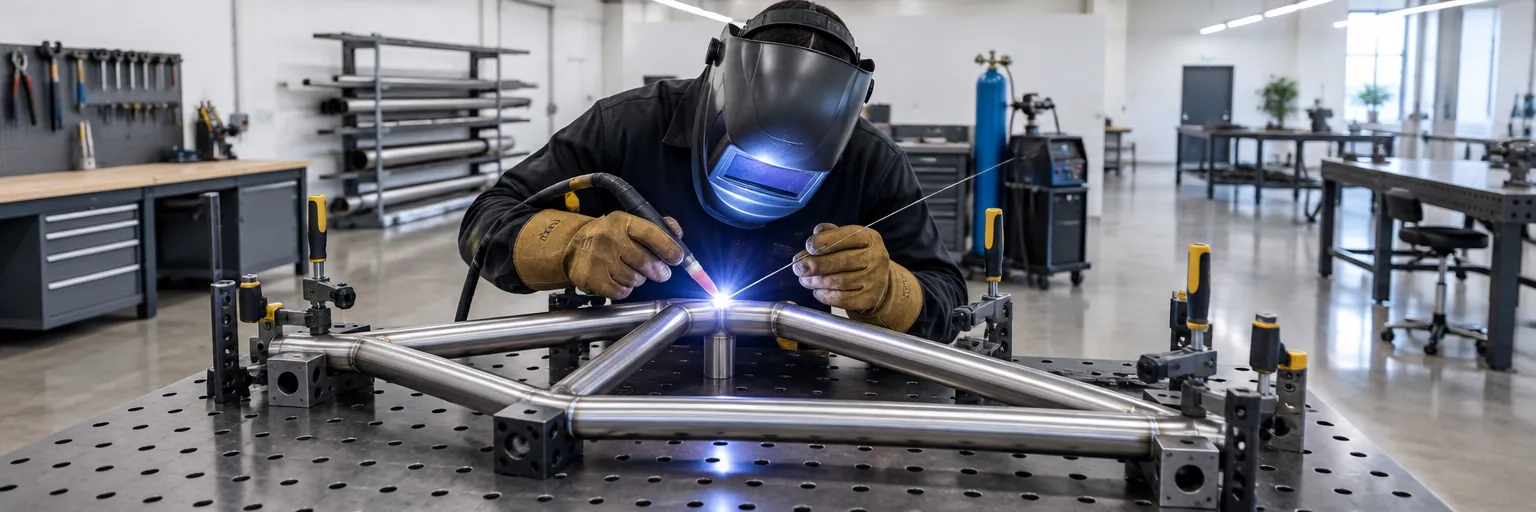
Gas tungsten arc welding (TIG) uses a non-consumable tungsten electrode and an inert gas shield to produce the cleanest, most controllable welds in the arc family. Because the welder controls heat and filler wire independently, TIG excels at thin sections, reactive metals, and cosmetic or leak-proof joints. This guide covers when to choose TIG, how to select materials, and how to design parts your fabrication shop can weld cleanly.
What TIG welding is
Gas tungsten arc welding (TIG) creates an electric arc between a non-consumable tungsten electrode and the workpiece inside an inert gas shield. The welder can fuse the base metal edges directly without filler, or feed a separate filler rod into the weld pool by hand. Because the electrode does not melt, the welder adjusts heat input and filler metal independently.
Most metals, including carbon steel, stainless steel, copper alloys, nickel alloys, and titanium, are welded with direct current, electrode negative (straight polarity). This puts about two thirds of the heat into the workpiece for deep, narrow penetration while keeping the tungsten tip cool enough to hold a sharp point. Aluminum and magnesium require alternating current. The electrode-positive half of each cycle breaks up the tough, high-melting surface oxide, while the electrode-negative half provides penetration.
Argon is the standard shielding gas because it starts easily, maintains a stable arc, and cleans aluminum well. Shops add helium or use argon-helium mixtures when they need more heat and deeper penetration on thick aluminum or copper.
When to use it
Specify TIG when weld quality, precision, and appearance matter more than speed. It is the standard choice for thin sheet metal, tubing, instruments, food equipment, aerospace assemblies, and display work. Specify it for joints that must look good, hold a leak-proof seal, or serve as a precise root pass or repair.
Because TIG deposits metal slowly and requires a skilled welder, it costs more per length of weld than any other arc process. Do not specify it for every seam on a large structure. Switch to another process when conditions change:
- Use MIG/MAG (wire welding) for thick sections or long runs where deposition rate matters.
- Use laser beam welding when heat input must be even smaller than TIG.
- Use stick welding for field steel work.
Material suitability
General material ratings help you choose a process route, though a specific grade, section thickness, and shop capability can differ:
- Excellent: Austenitic stainless steel (the preferred choice for stainless tube and sheet), commercially pure titanium, low-carbon steel, and high-strength low-alloy (HSLA) steel.
- Good: Wrought aluminum, alpha-beta titanium, nickel-copper alloys, medium-carbon steel, chromium-molybdenum steel, ferritic stainless steel, duplex stainless steel, and precipitation-hardening stainless steel.
- Fair: High-carbon steel (usually avoided in favor of mechanical joining), martensitic stainless steel, cast aluminum (prone to gas porosity, best for repairs), and pure copper (high thermal conductivity requires heavy preheat).
- Poor: Brass (zinc boils off in the arc, causing fumes and porous welds), cold-work tool steel, and gray cast iron.
How to design parts for TIG
No universal numeric limits apply to TIG joint dimensions, so consult your welding shop or the governing steel or aluminum code early in your design. Follow these physical layout rules so the welder can make a sound joint:
- Provide access and sightlines: A TIG torch is small and reaches tighter spaces than a MIG gun, but the welder still needs a clear line of sight to the weld pool and room for the hand feeding the filler rod.
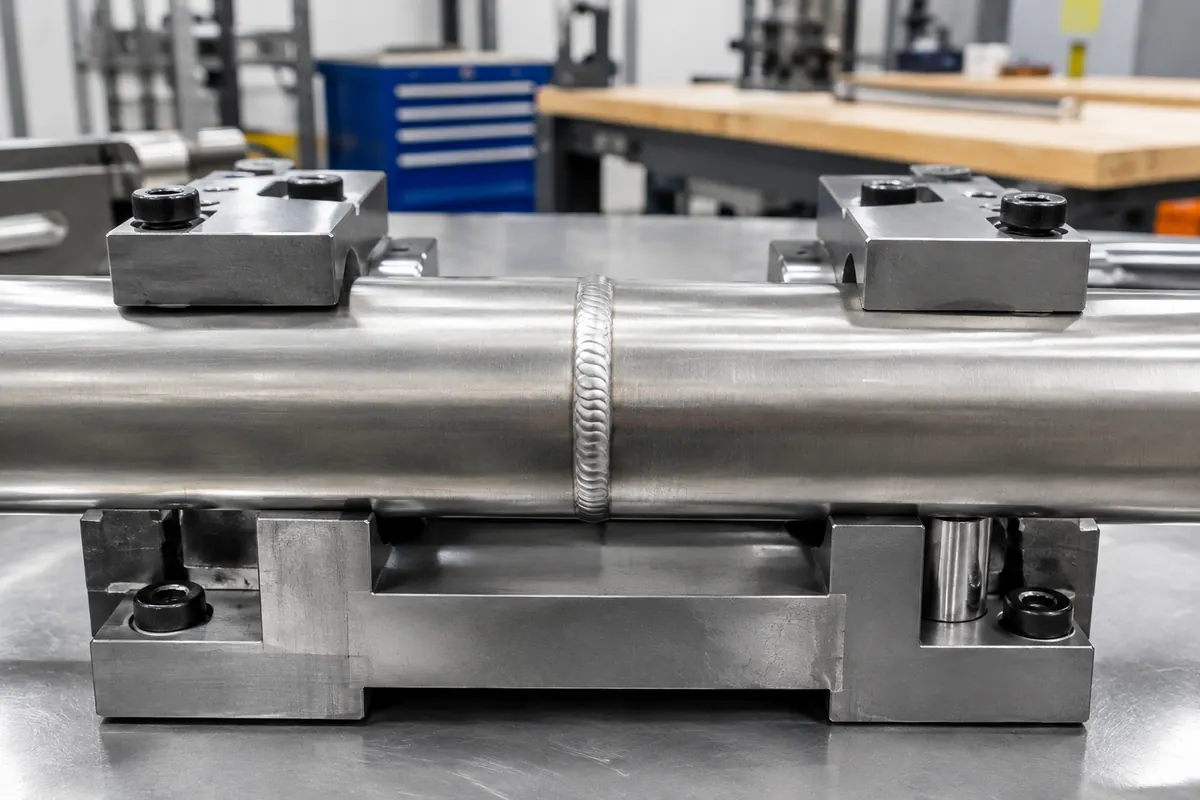
- Hold tight, clean fit-up: TIG can fuse thin edge, flange, and lap joints without filler (autogenously), but only if the edges touch along the entire seam. Any gap requires the welder to bridge it by hand with filler wire, which slows the job and alters the joint.
- Balance section thicknesses: Keep mating parts similar in thickness so heat flows evenly. If you must join a thick section to a thin one, taper or thin the heavier part at the joint.
- Plan for clamping: Heat exposure distorts metal. TIG puts less heat into the part than other arc processes, but thin sheet metal will still warp unless the joint is designed so the shop can clamp and fixture it.
Defects and pitfalls to watch out for
Designers and quality engineers should watch for several process-specific issues when specifying and inspecting TIG welds:
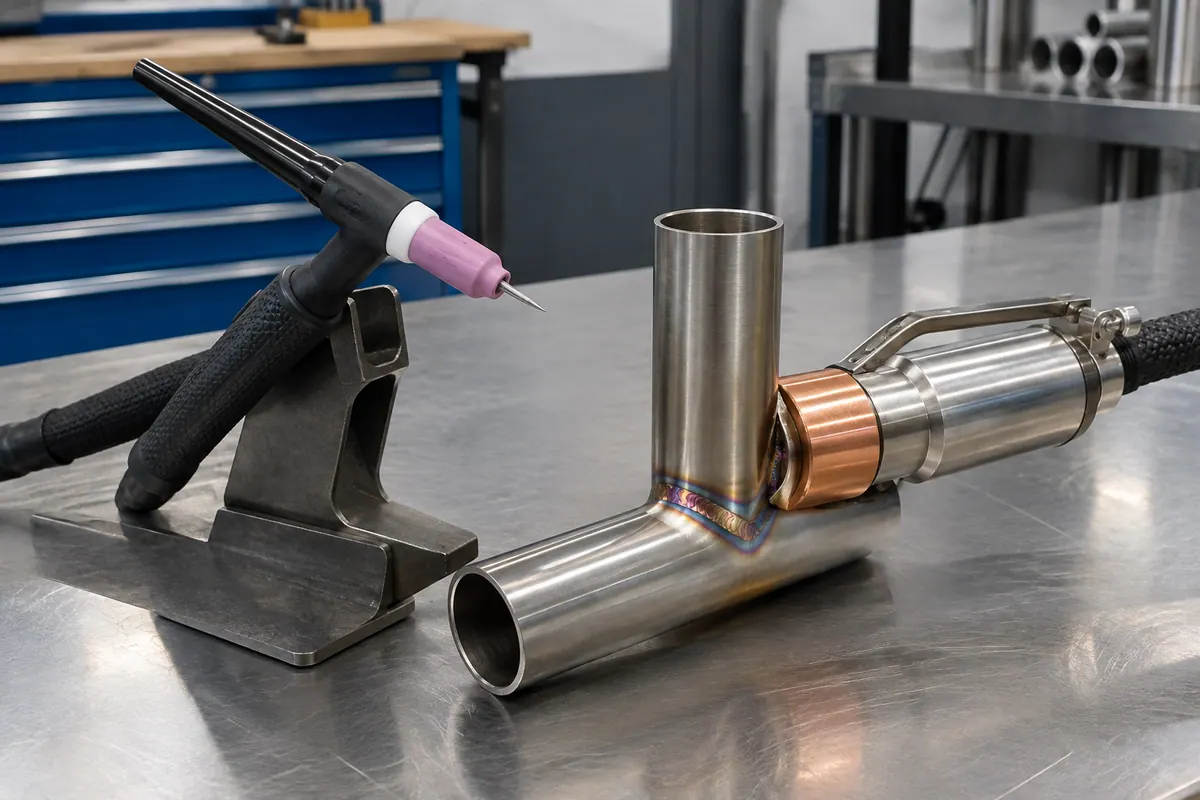
- Back-side oxidation (sugaring): Hot stainless steel, titanium, and nickel alloys react with air on the unshielded back side of a full-penetration weld. The shop must purge the inside of tubes and the back of joints with inert gas. Without a back purge, the root oxidizes, loses corrosion resistance, and traps contamination.
- Titanium embrittlement: Hot titanium absorbs oxygen, nitrogen, and hydrogen from the air, making the weld brittle. Titanium requires meticulous cleaning and full inert-gas coverage over the pool, the root, and the cooling bead using trailing shields or a purge chamber. Blue or gray discoloration on a titanium weld is a sign of contamination.
- Heat-affected zone softening and hardening: In heat-treated aluminum alloys, the parent metal near the weld softens and loses tensile strength. In precipitation-hardening stainless steels, the strengthening heat treatment is normally redone after welding. Medium-carbon, chromoly, and martensitic stainless steels require preheat and post-weld heat treatment to prevent hard, cracked weld zones.
- Tungsten inclusions: If the welder touches the tungsten electrode to the weld pool or filler wire, tungsten transfers into the weld and ruins the electrode tip. The shop must stop, break off or grind out the contaminated metal, and regrind the tungsten lengthwise. Giving the welder ample clearance and a steady hand position prevents dips.
Standards and shop qualification
When calling out TIG welding on engineering drawings, check the applicable structural code. Under AWS D1.1/D1.1M (the structural welding code for steel), gas tungsten arc welding is not prequalified. That means the shop must qualify the welding procedure specification (WPS) by test, proving the specific joint design, filler metal, and electrical settings, before starting production.
For aluminum fabrications, AWS D1.2/D1.2M covers TIG welding under its qualification rules. Always confirm with your fabrication shop which procedures they already have qualified, as designing around an existing qualified procedure saves testing time and cost.
Design rules at a glance
| Rule | Value | Note | Source |
|---|---|---|---|
| Heat distribution on DC electrode negative | About 2/3 in work, 1/3 in electrode | Used for steels, stainless, copper, nickel, and titanium; gives deep penetration while keeping the tungsten point cool. | [2] |
| Current type for aluminum and magnesium | Alternating current (AC) | Electrode-positive half-cycle breaks up surface oxide; electrode-negative half-cycle provides penetration. | [2] |
| Fit-up gap for autogenous (no-filler) welds | Edges must touch along whole seam | Required for thin edge, flange, and lap joints fused without filler; any gap must be bridged by hand with filler. | [1] |
| Austenitic stainless steel suitability | Excellent | Preferred process for stainless tube and sheet; control heat to limit distortion and sensitization (advisory rating, confirm with shop). | [1] |
| Low-carbon and HSLA steel suitability | Excellent | Clean, precise welds in thin and thick low-carbon steel; HSLA rated excellent in overview and good in table with controlled heat input (advisory rating). | [1] |
| Commercially pure titanium suitability | Excellent | Requires full inert-gas coverage on pool, root, and cooling bead until cool; blue or gray color indicates embrittlement (advisory rating). | [1] |
| Wrought aluminum suitability | Good | Uses AC and pure or zirconiated balled tungsten; parent metal softens near the weld in heat-treated alloys (advisory rating). | [1] |
| Duplex, ferritic, and PH stainless suitability | Good | Duplex needs filler and heat control; ferritic loses toughness if overheated; PH normally needs post-weld heat treatment (advisory rating). | [1] |
| Medium-carbon and chromoly steel suitability | Good | Requires preheat and slow cooling or post-weld heat treatment to keep the heat-affected zone tough and avoid cracking (advisory rating). | [1] |
| Pure copper and cast aluminum suitability | Fair | Copper needs heavy preheat and argon-helium gas for high conductivity; cast aluminum is prone to gas porosity (advisory rating). | [1] |
| Brass, cold-work tool steel, and gray cast iron suitability | Poor | Zinc in brass boils off causing porous welds; tool steel and cast iron crack easily and are limited to preheated repairs (advisory rating). | [1] |
Common questions
- When should I specify TIG instead of MIG welding?
- Specify TIG for thin sections, reactive metals like titanium, and stainless or aluminum joints that must look clean or hold a leak-proof seal. Because TIG is slow and costs more per length of weld, switch to MIG when welding thick sections or long structural seams where deposition speed matters.
- Can parts be TIG welded without adding filler wire?
- Yes, thin edge, flange, and lap joints can be fused directly without filler metal. However, the mating edges must touch tightly along the entire seam. If there is any gap, the welder must fill it by hand with filler wire, which slows the process and changes the joint.
- Why do stainless steel and titanium TIG welds need a back purge?
- Hot metal on the unshielded root side of a full-penetration weld reacts with oxygen in the air. On stainless steel, this causes heavy oxidation (sugaring) that ruins corrosion resistance. On titanium, absorbing oxygen, nitrogen, or hydrogen causes immediate embrittlement. Filling the back of the joint or inside of the tube with inert argon gas prevents this reaction.
- Why does TIG welded aluminum lose strength near the joint?
- In heat-treated aluminum alloys, the heat of the welding arc alters the temper in the heat-affected zone, leaving the finished weld area softer and lower in tensile strength than the parent metal.
- Can I TIG weld brass components?
- Brass is rated poor for TIG welding. The heat of the arc boils off the zinc in the alloy, which releases fumes and leaves porous, defective welds.